Peripheral Vision Narrows First
The centre may remain clear while side vision fades, so patients may not notice damage until late disease.
iStent inject W, Hydrus-style MIGS care and complete glaucoma diagnostics
Micro-incision precision, optic nerve protection and complete glaucoma diagnostics. IOP matters, but glaucoma diagnosis also depends on OCT, visual fields, optic nerve assessment and corneal thickness.
Many patients have no pain and no warning. Some have raised IOP, some have normal-pressure glaucoma, and some have suspicious optic nerves. Diagnosis is made by putting the whole picture together.
The centre may remain clear while side vision fades, so patients may not notice damage until late disease.
Pressure alone is not enough. OCT nerve scan, visual field testing, optic disc appearance and corneal thickness guide the diagnosis.
iStent inject W and Hydrus-style MIGS pathways can improve drainage through very small incisions in suitable patients.
MIGS is easier to understand when patients see the sequence: confirm diagnosis, open the natural drainage pathway, then monitor pressure and optic nerve stability.
Pressure is only one part. OCT, visual fields, gonioscopy and optic nerve appearance decide risk.
iStent inject W or Hydrus-style MIGS can improve drainage in carefully selected eyes.
Follow-up tracks IOP, fields and OCT so treatment is adjusted before silent loss progresses.
Glaucoma is a group of eye conditions that damage the optic nerve - the critical connection between your eye and your brain. Often called the "silent thief of sight," it progresses slowly, without pain or symptoms, until significant and irreversible vision loss has already occurred.
Raised intraocular pressure (IOP) is an important and treatable risk factor, but it is not the only diagnostic factor. Some patients develop glaucoma at statistically normal pressures, while others have high pressure without nerve damage. A proper diagnosis combines IOP, optic nerve appearance, OCT retinal nerve fibre layer analysis, visual field testing, corneal thickness and risk profile.
India carries one of the world's heaviest glaucoma burdens. Over 12 million Indians are estimated to have glaucoma, yet more than half remain undiagnosed - often until damage is irreversible. Early detection and effective IOP control are the only way to preserve sight.
MIGS - Minimally Invasive Glaucoma Surgery - is the most significant advance in glaucoma treatment in a generation. Instead of the large incisions and tissue disruption associated with traditional glaucoma surgeries, MIGS uses microscopic instruments through incisions under 2mm to restore or augment the eye's natural drainage pathways.
A tiny channel, micro-stent, or trabecular bypass device is precisely placed under gonioscopic visualisation - real-time microscopic guidance - to reduce intraocular pressure without removing or permanently altering major eye tissue. The result is durable IOP reduction with a dramatically lower risk profile than conventional surgery.
A transformative approach that makes advanced glaucoma treatment accessible, safe, and effective - even for patients who would otherwise simply manage with eye drops indefinitely.
The clinical evidence is clear - for mild-to-moderate glaucoma, especially when combined with cataract surgery, MIGS delivers superior outcomes with a vastly better safety profile.
From your first consultation to long-term clear vision - here's exactly what to expect at every stage.
A comprehensive glaucoma work-up: visual field testing, OCT optic nerve head analysis, gonioscopy to assess the drainage angle, corneal topography, pachymetry, and 24-hour IOP diurnal curve measurement. This data determines whether you're a MIGS candidate and which device/approach is optimal for your anatomy.
No general anaesthesia, no overnight stay, no fasting required. Anaesthetic eye drops are instilled 20 minutes before surgery. The procedure takes 15-20 minutes per eye. You will be awake and comfortable throughout. A driver is recommended, but you can eat and drink normally beforehand.
A precision incision smaller than 2mm - identical to a cataract surgery incision - is made at the corneal margin. This self-sealing entry is the same size as the tip of a ballpoint pen. No sutures are needed, and the incision heals naturally within hours.
Under the microscope with a specialised gonioscopic lens providing real-time visualisation of the drainage angle, the MIGS device or micro-channel is precisely placed into the trabecular meshwork or Schlemm's canal. This restores the eye's natural aqueous drainage, reducing IOP immediately.
Day 1 review (IOP check, wound assessment), Week 1 (visual acuity and IOP confirmation), Month 1 (medication adjustment if needed), Month 3 (stability assessment), Month 6 (long-term IOP target review). Your drops may be reduced or eliminated based on your IOP response at each visit.
MIGS is not one-size-fits-all - Dr. Baweja conducts a thorough pre-surgical assessment to identify the best candidates for optimal outcomes.
The primary MIGS indication - patients with early to moderate disease who need better IOP control than drops alone provide.
The ideal combined case - MIGS is performed through the same cataract incision, treating both conditions in a single 20-minute session.
Patients with surface irritation, allergy to preservatives, or compliance difficulties benefit from surgical IOP control.
Before trabeculectomy becomes necessary - MIGS at the right stage can prevent progression and preserve all surgical options for the future.
Multiple eye drops are costly, time-consuming, and have systemic side effects. MIGS can dramatically reduce or eliminate the drop regimen.
When maximum-tolerated medical therapy is insufficient to achieve target IOP, MIGS provides a safe next-step before more invasive filtration surgery.
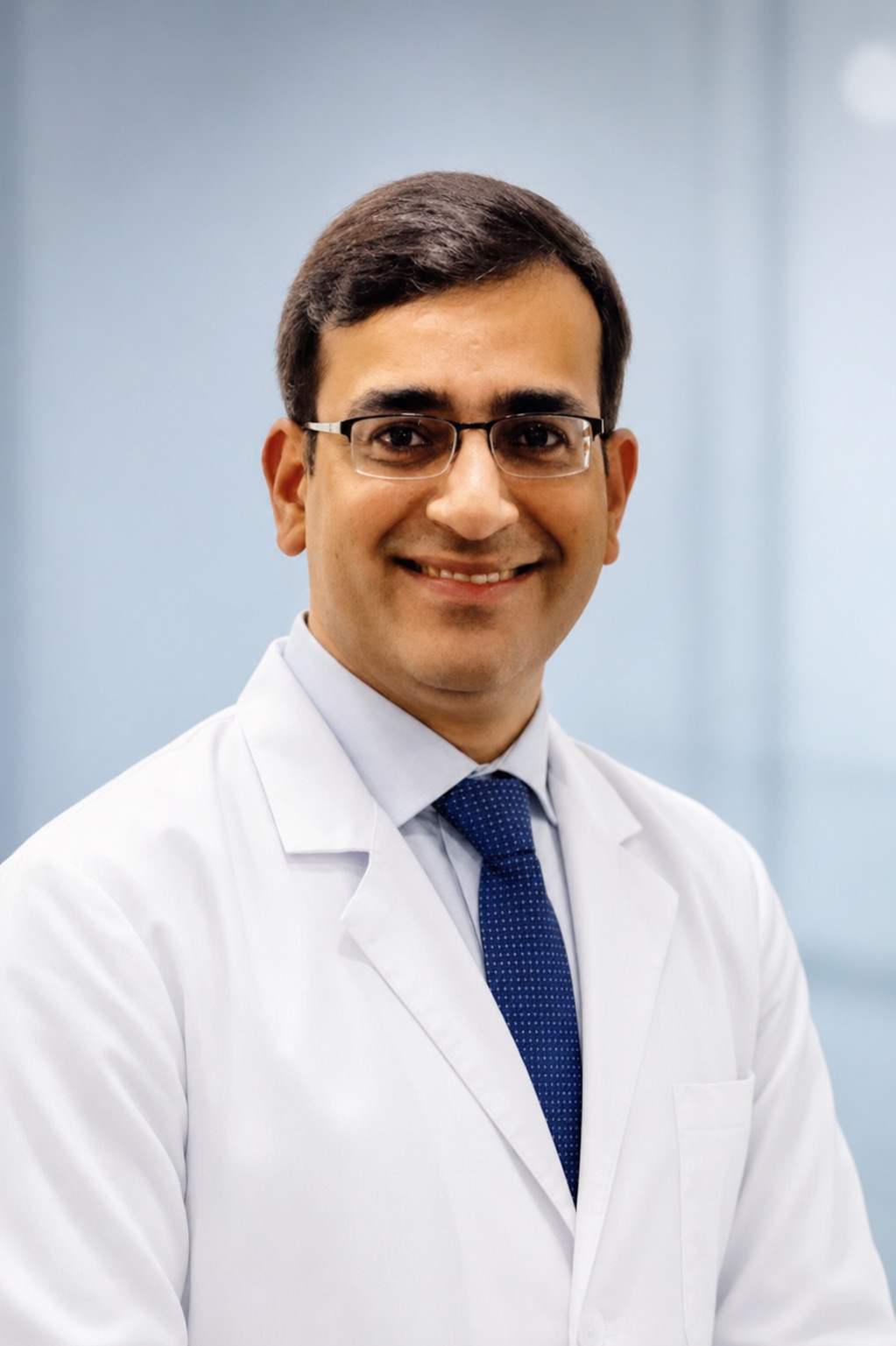
Trained in the United Kingdom's National Health Service - where MIGS is established standard-of-care protocol - Dr. Baweja brought this transformative technology to the Chandigarh region. His precision surgical technique, combined with a genuinely patient-first philosophy, has delivered sight-preserving outcomes for hundreds of glaucoma patients across North India.
Dr. Baweja's training encompassed the full MIGS device portfolio and gonioscopic surgery techniques used at leading NHS teaching hospitals, where volume and precision benchmarks are among the highest in the world. Each MIGS patient undergoes a rigorous pre-operative evaluation to ensure the right procedure, the right device, and the right timing.
Answers to the questions our glaucoma patients ask most often before choosing MIGS at BMH.
Glaucoma damage is permanent and irreversible - but with timely MIGS, vision can be preserved for life. Our team is ready to evaluate you, answer every question, and create a personalised treatment plan.