Permanent Vision Correction

Laser vision correction guided by corneal mapping and lifestyle needs

See the World Clearly —
Without Glasses or Contacts

SMILE Pro, blade-free LASIK, touchless flapless LASIK, advanced surface ablation and topography-guided LASIK pathways — selected after corneal mapping, not sales pressure.

+91-6280048805
Laser vision options

LASIK, SMILE Pro, Touchless and Topography-Guided LASIK

The best laser procedure depends on corneal thickness, shape, dryness, pupil size, prescription stability and lifestyle. A topography map decides whether LASIK, SMILE Pro, bladeless LASIK or advanced surface ablation is safest.

Blade-Free LASIK

A femtosecond laser creates the flap, then an excimer laser reshapes the cornea. No mechanical blade is used.

Touchless / Flapless LASIK

Advanced surface ablation treats the corneal surface without creating a flap, useful for selected thin corneas or active lifestyles.

Topography-Guided Planning

Corneal maps help customise treatment and screen for unsafe corneas before any laser is recommended.

Best eye surgeon for LASIK in Chandigarh: Dr. Varun Baweja assesses SMILE Pro, bladeless LASIK, touchless flapless LASIK and topography-guided LASIK suitability with objective scans before advising surgery.
Procedure pictures

Click a Laser Option to Understand the Steps

Each refractive procedure changes the cornea differently. These quick visual cards help patients understand why scanning and candidacy checks matter.

Blade-Free LASIK

Femtosecond flap creation followed by excimer reshaping. Fast recovery for suitable corneas.

Touchless Surface Ablation

No flap is created. The laser treats the surface for selected thin corneas and active lifestyles.

TopoDry EyePachyPupil

Topography-Guided LASIK

Corneal maps guide customised treatment and screen out unsafe corneas before surgery.

Three Proven Roads to Glasses-Free Vision

Not every eye is the same. BMH offers three advanced laser vision correction procedures — Dr. Baweja will recommend the optimal choice based on your corneal anatomy, lifestyle, and prescription.

Most Popular

Blade-Free LASIK

The gold standard of vision correction. A femtosecond laser creates a precise corneal flap — no blade, no mechanical microkeratome — followed by an excimer laser that reshapes the cornea to your exact prescription. Clear vision typically achieved by the next morning.

25+ year proven track record worldwide
Next-day visual recovery for most patients
Suitable for most prescriptions (up to -10D)
Requires adequate corneal thickness ≥480µm
10–15 minutes per eye
Flapless

CLEAR

Corneal Lenticule Extraction Refractive — a completely flapless procedure ideal for patients with active lifestyles, contact sports, or those at risk of flap complications. A small lenticule of corneal tissue is extracted through a tiny incision, reshaping vision without creating a flap at all.

No flap — zero flap-related complications
Ideal for sports, military, physically active patients
Significantly lower dry eye incidence post-surgery
Excellent refractive stability long-term
Suitable for myopia and astigmatism
Premium

SMILE Pro

Small Incision Lenticule Extraction — the most advanced keyhole laser vision correction technique. A 2–3mm arc incision allows extraction of a precisely cut corneal lenticule with minimal disruption to the corneal surface and nerves, preserving maximum biomechanical integrity.

Smallest incision of any laser procedure (2–3mm)
Minimal corneal nerve disruption
Premium choice for high myopia
Lowest post-op dry eye risk of all procedures
No flap, no blade, no excimer laser required

The LASIK Journey at BMH

From your first consultation to waking up with clear vision — every stage is precisely mapped, guided, and monitored by our surgical team.

1

Comprehensive Eye Mapping

Corneal topography, Pentacam analysis, pachymetry (corneal thickness), pupil diameter, dry eye assessment, and full refraction. This 60-minute workup determines candidacy and builds your personalised laser ablation profile.

60 min · Consultation day
2

Femtosecond Flap Creation

A computer-guided femtosecond laser creates a precisely thin, uniform corneal flap in under 20 seconds. No blade, no cutting wheel. The flap thickness and diameter are customised to your anatomy.

~20 seconds · Surgery day
3

Custom Excimer Laser Reshaping

The excimer laser precisely reshapes your corneal stroma using your personalised ablation profile — correcting myopia, hyperopia, and astigmatism simultaneously with sub-micron accuracy and live eye-tracking.

45–90 seconds · Surgery day
4

Flap Repositioned — Vision Begins

The flap is gently repositioned. It self-seals within seconds through natural adhesion. No stitches. You rest for 30 minutes, then go home. Most patients notice dramatically improved vision within hours.

Day 1 review next morning

Total procedure time per eye: 10–15 minutes

Am I a LASIK Candidate?

A thorough pre-surgical assessment is mandatory — not every eye is suitable for every procedure. Here's a general guide:

Generally Suitable for LASIK

Green Light Criteria
Age 18 years or older (ideally 21+ for stability)
Stable prescription for at least 12 consecutive months
Adequate corneal thickness (typically ≥480µm)
Normal corneal topography (no irregularities)
Myopia, hyperopia, or astigmatism within treatable range
No significant dry eye disease on assessment
Not pregnant or breastfeeding at time of procedure

Needs Individual Assessment

Needs Review
Thin corneas — may be redirected to SMILE or CLEAR instead
Keratoconus or irregular corneal astigmatism
Moderate to severe dry eye syndrome (treat first, then reassess)
Active corneal disease (herpes keratitis, corneal ectasia)
Certain autoimmune conditions (lupus, rheumatoid arthritis — assessed individually)
Pupil size concerns in low-light conditions
Very high prescriptions may require alternative correction (ICL)

Not sure if you qualify? Our free LASIK assessment answers every question.

LASIK Results at BMH

Over four decades of surgical excellence, backed by some of the best outcomes data in the region.

99%
of patients achieve 6/6 (20/20) vision or better after LASIK
20+
Years of proven lasting results with blade-free femtosecond LASIK
10 min
Total procedure time per eye — including flap and laser reshaping
Next day
Most patients return to work and normal activities the following morning

Precision Instruments Behind Your Vision

World-class laser vision correction demands advanced technology. BMH operates a fully integrated laser suite.

Femtosecond Laser

Ultra-rapid laser pulses create a perfectly uniform corneal flap with sub-micron precision. No blade, no mechanical instruments.

Flap Creation

Excimer Laser

Cold UV-B laser reshapes corneal tissue at the molecular level with live eye-tracking, ensuring the ablation stays on-target even with eye movement.

Corneal Reshaping

Corneal Topographer

High-resolution 3D mapping of your entire corneal surface — identifying subtle irregularities that guide your personalised treatment profile.

Pre-op Mapping

Pentacam (Scheimpflug)

Rotating Scheimpflug camera provides 25,000 elevation points across the full anterior segment — the most detailed corneal analysis available.

Corneal Analysis
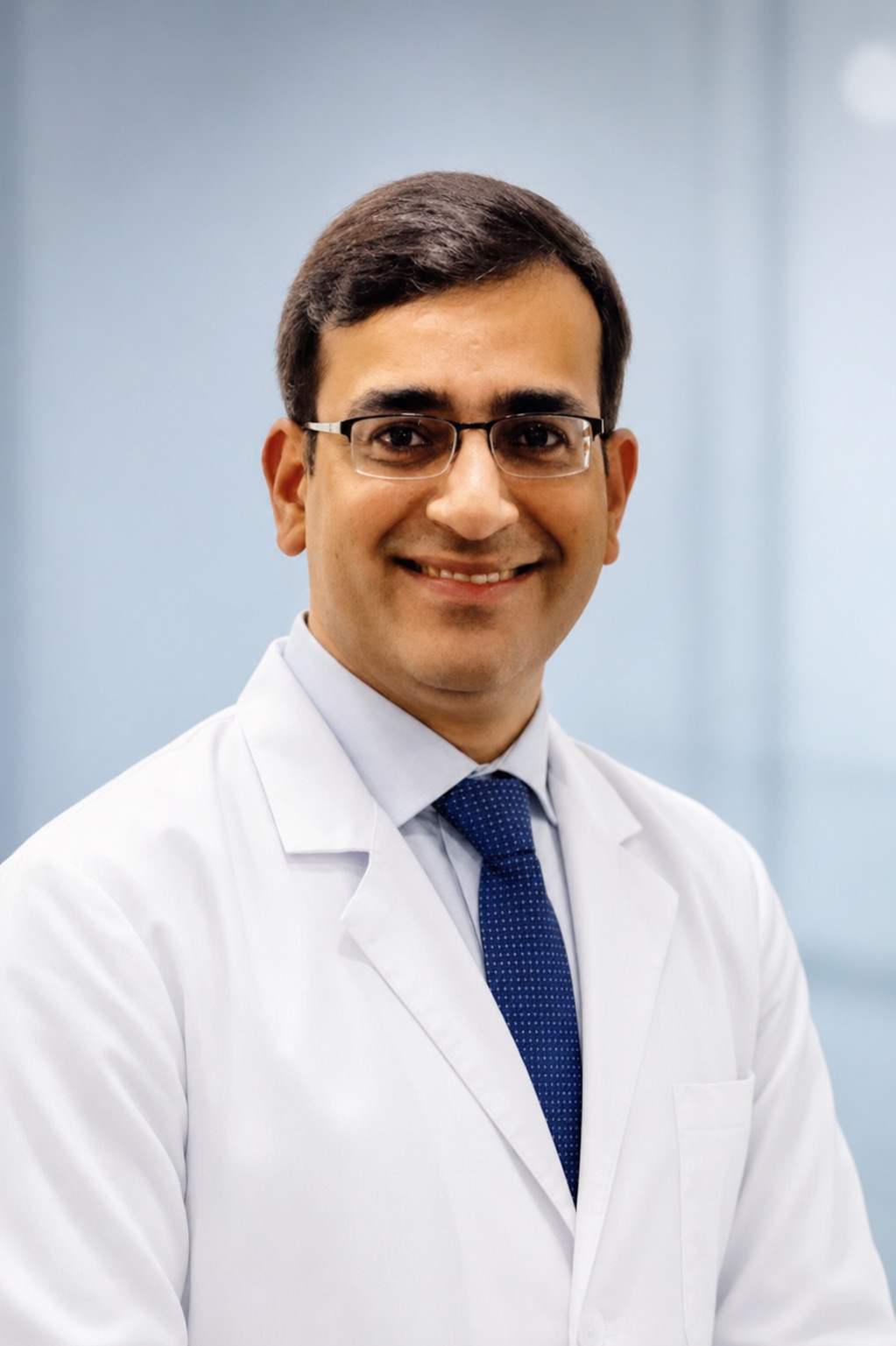
Meet Your LASIK Surgeon

Dr. Varun Baweja

Dr. Varun Baweja

MBBS, MS (Ophthalmology) · NHS Fellow, United Kingdom · Ophthalmic & Refractive Surgeon

With UK NHS Cambridgeshire experience, Dr. Baweja's refractive surgery work spans blade-free LASIK, SMILE Pro, CLEAR, touchless surface ablation and topography-guided planning. His approach begins with meticulous pre-surgical candidacy screening — he will only recommend surgery when the data supports an excellent outcome for your specific eye.

Dr. Baweja's personalized treatment philosophy means every LASIK patient receives a customised ablation profile, not a template. His post-operative care protocol includes Day 1, Week 1, Month 1, and Month 6 reviews to monitor for any changes and ensure your vision remains optimal long-term.

NHS Fellow, UK Blade-Free LASIK SMILE Pro Refractive Surgery MS Ophthalmology

Frequently Asked Questions

Everything you need to know before your LASIK consultation at BMH.

How is blade-free LASIK different from traditional LASIK?

Traditional LASIK used a mechanical microkeratome — a small oscillating blade — to create the corneal flap. Blade-free LASIK replaces this entirely with a femtosecond laser, which creates the flap with far greater precision, consistent thickness, and individually tailored geometry. The femtosecond flap has a more uniform architecture, better seals, and a significantly lower rate of flap complications including buttonholing, free caps, and irregular flaps. At BMH we exclusively use femtosecond technology — blade-based LASIK is not performed.

Is LASIK permanent?

Yes — LASIK permanently reshapes your cornea. The correction itself does not "wear off." However, presbyopia (age-related near vision loss) will develop naturally in your 40s regardless of LASIK, and some patients develop mild regression over years, particularly those with very high prescriptions. For most patients with stable prescriptions, 20+ year studies show durable excellent vision. Any regression can be assessed for an enhancement procedure if required.

Does LASIK hurt?

LASIK is performed under topical anaesthetic (numbing drops). The procedure itself is painless — you will feel pressure from the suction ring during flap creation, and some patients notice a mild smell during the laser reshaping step. Post-operatively, it is common to experience a gritty or burning sensation for 4–6 hours, which resolves with rest. Pain after LASIK is uncommon — most patients find the experience much more comfortable than they anticipated.

Can I have both eyes done on the same day?

Yes, bilateral simultaneous LASIK (both eyes on the same day) is the standard approach at BMH and worldwide. The risk of any serious intraoperative complication is so low that sequential same-day treatment is both safe and practical. It means one recovery period, one set of post-operative drops, and one day off work. Single-eye procedures are reserved for specific clinical reasons.

What is the difference between LASIK, CLEAR, and SMILE Pro?

LASIK creates a flap that is lifted to allow excimer laser reshaping, then replaced. CLEAR and SMILE Pro are flapless lenticule-extraction procedures through a tiny keyhole incision. Touchless advanced surface ablation works on the corneal surface without a flap. Topography-guided LASIK customises treatment using corneal maps. Dr. Baweja will recommend the right procedure for your anatomy at your assessment.

What is the minimum age for LASIK?

The minimum age is 18 years, but we typically prefer patients to be 21 or older and to have had a stable prescription for at least 12 months. This is because the eye can continue to change through the late teens and early 20s, and performing LASIK before prescription stability is established increases the risk of regression. There is no upper age limit for LASIK — the procedure is appropriate throughout adulthood, though older patients may also need to plan for presbyopia correction.

Your perfect vision is one
consultation away.

Life without glasses or contacts isn't a luxury — it's a decision. Book your screening today and let our team determine whether SMILE Pro, blade-free LASIK, touchless surface ablation or topography-guided LASIK is right for your eyes.

Call Us
Chat with us on WhatsApp